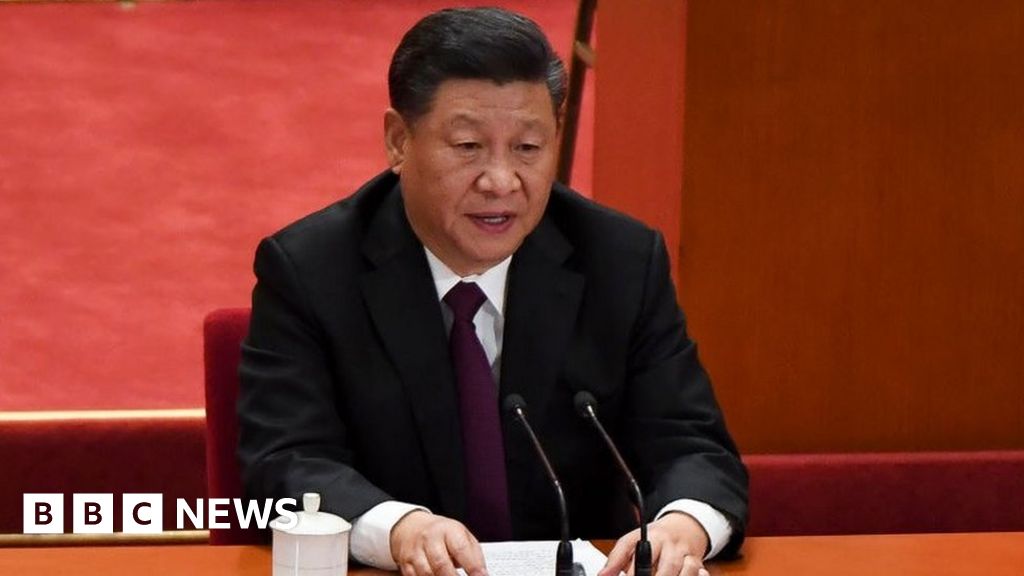
The Enduring Standoff: Xi Jinping's Vision for Taiwan and Cross-Strait Realities
The relationship between mainland China and Taiwan remains one of the most complex and potentially volatile geopolitical flashpoints in the 21st century. At its heart lies the unwavering stance of Chinese President Xi Jinping, who consistently reiterates Beijing's ambition for "reunification" with Taiwan. This article delves into Xi Jinping's pronounced vision for Taiwan, the democratic island's resolute self-determination, and the intricate dynamics that shape cross-strait relations, including recent high-level political engagements.
For decades, the prospect of xi jinping taiwan reunification has been a central pillar of Chinese Communist Party (CCP) policy, deeply intertwined with national identity and historical narratives. Understanding this multifaceted issue requires examining both sides' perspectives and the intricate web of political, economic, and strategic interests at play.
Xi Jinping's Unwavering Stance on "Reunification"
Chinese President Xi Jinping has frequently, and unequivocally, stated that the "reunification" of Taiwan with the mainland is an "inevitable" historical trend and a non-negotiable goal. His New Year's speeches and key policy addresses consistently feature this commitment, often using phrases like "surely be reunified" and framing it as Taiwan needing to vote on the "right side of history." This declaration is rooted in the "One China Principle," which posits that there is only one sovereign state under the name China, and Taiwan is an inseparable part of it. While Beijing advocates for "peaceful reunification," it has never renounced the use of force, maintaining it as a last resort against "separatist" movements.
This resolute stance is driven by several factors:
- Nationalist Imperative: Reunification is presented as the completion of China's national rejuvenation, correcting a historical wrong dating back to the Chinese Civil War.
- CCP Legitimacy: For the CCP, achieving this goal is vital for its political legitimacy and upholding the party's narrative of strength and sovereignty.
- Strategic Interests: Taiwan's strategic location in the first island chain holds immense military and economic significance for China's regional dominance.
Xi's emphasis on "reunification" serves not only as a domestic rallying cry but also as a clear signal to the international community about China's perceived sovereign rights over Taiwan. This narrative often leaves little room for Taiwan's distinct political identity or the will of its people.
Taiwan's Democratic Resolve: The Will of the People
In stark contrast to Beijing's top-down approach, Taiwan operates as a vibrant democracy where the future of cross-strait ties is unequivocally tied to the "will of the people." Taiwan's current ruling Democratic Progressive Party (DPP), led by President Lai Ching-te, champions self-determination and maintains that bowing to China's demands is not an option. President Lai has consistently stated that Taiwan seeks peace but holds no "unrealistic dreams" about China's intentions, especially amid ongoing "grey zone" threats – a reference to tactics like military incursions, disinformation campaigns, and economic coercion.
Taiwan's perspective is shaped by:
- Democratic Values: A deeply ingrained commitment to democratic governance, freedom of speech, and human rights, which stands in stark contrast to mainland China's authoritarian system.
- Distinct Identity: A growing sense of a unique Taiwanese identity, separate from mainland China, particularly among younger generations who have never lived under KMT one-party rule or experienced direct links to the mainland's past.
- Historical Lessons: Awareness of historical precedents, where capitulation to external pressure has led to loss of sovereignty. As President Lai noted on the 47th anniversary of the Taiwan Relations Act, "history has taught Taiwan that bowing to China means war."
The island's resilience in the face of persistent military pressure and diplomatic isolation underscores its commitment to maintaining its self-governed status. Taiwan consistently seeks to strengthen its international partnerships, especially with countries that uphold democratic values and understand the strategic implications of any change in the cross-strait status quo.
Navigating the Strait: The KMT's Approach and the 1992 Consensus
While the DPP takes a firmer stance on Taiwan's sovereignty, Taiwan's main opposition party, the Kuomintang (KMT), adopts a more conciliatory approach towards mainland China. A notable event illustrating this was the recent meeting between KMT chairwoman Cheng Li-wun and President Xi Jinping in Beijing, the first such high-level encounter in a decade. This meeting, while criticized by the DPP as being "subservient" to Beijing, was framed by the KMT as an effort to "safeguard the peace and stability of our shared homeland" and promote peaceful development.
A central tenet of the KMT's cross-strait policy is adherence to the 1992 Consensus. This agreement, reached between representatives from both sides of the Taiwan Strait, acknowledges "one China" but allows for differing interpretations of what that "China" represents. For the KMT, it means "one China, with each side having its own interpretation" (“one China, respective interpretations”). Beijing, however, tends to emphasize the "one China" aspect while downplaying the "respective interpretations."
The KMT views the 1992 Consensus as a crucial mechanism to:
- Avoid War: It's seen as a diplomatic framework that reduces tensions and creates a basis for dialogue, thereby preventing conflict.
- Maintain Stability: Providing a pragmatic pathway for engagement and economic cooperation without formally conceding sovereignty.
- Shared Heritage: Emphasizing shared Chinese heritage and the idea of "one family" across the Strait, which resonates with some segments of the Taiwanese population.
Cheng Li-wun's decision not to publicly raise concerns about China's military pressure during her meeting with Xi suggests a strategic choice to focus on common ground and de-escalation, even if it implies an acceptance of China's narrative regarding "separatists." This difference in approach between the KMT and DPP highlights the deep internal divisions within Taiwan on how best to manage the complex relationship with Beijing.
The Stakes and the Global Outlook
The dynamic between xi jinping taiwan extends far beyond the immediate cross-strait region, carrying profound implications for global stability, trade, and democracy. Any significant escalation or conflict in the Taiwan Strait would have catastrophic economic consequences, given Taiwan's critical role in the global technology supply chain, particularly in advanced semiconductor manufacturing. Furthermore, it would challenge the foundational principles of international law and self-determination.
Key considerations in this global outlook include:
- U.S. Policy: The United States maintains a policy of "strategic ambiguity" towards Taiwan, providing defensive capabilities to the island while not explicitly stating whether it would intervene militarily in a cross-strait conflict. The Taiwan Relations Act underscores the U.S.'s commitment to Taiwan's security.
- Regional Alliances: Countries like Japan, South Korea, Australia, and various European nations closely watch the situation, recognizing the potential ripple effects on regional security and their own economic interests.
- Electoral Impact: Taiwan's democratic elections are a critical barometer. Beijing often tries to influence these outcomes, urging voters to choose leaders aligned with "peaceful reunification," though such efforts often prove counterproductive.
Understanding these intricate layers is essential for anyone following international affairs. The future of cross-strait relations will heavily depend on diplomatic efforts, military deterrence, and the evolving will of the Taiwanese people. For further insights into the nuanced strategies involved, you might want to explore topics like Beijing's grey zone tactics or Taiwan's defensive capabilities, which are explored in xi jinping taiwan - Article 2. Additionally, analysis of the economic interdependence and technological rivalry forms another crucial dimension, as discussed in xi jinping taiwan - Article 3.
Conclusion
The issue of xi jinping taiwan represents a clash of deeply held principles: China's assertion of territorial integrity and historical inevitability versus Taiwan's democratic sovereignty and the self-determination of its people. Xi Jinping's unwavering commitment to "reunification" sets a clear agenda for Beijing, while Taiwan's democratic government, supported by a growing sense of national identity, remains steadfast in its resolve. The role of the KMT and the 1992 Consensus offer a complex intermediary pathway, but one that is increasingly scrutinized by both sides. As cross-strait relations continue to evolve, the world watches closely, recognizing that the resolution of this standoff will have profound consequences for regional stability and the global order.